


ИИ и нетканые материалы: данные, машины и качество полотна
Обзор на русском: где ИИ уже даёт измеримый эффект на линиях нетканых материалов – машинное зрение, предиктивное обслуживание и мягкие датчики.
Explore current manufacturing news, applied innovation, conference movement, analysis and executive perspectives without archive clutter or WordPress-era visual noise.

Few industrial materials are as present in daily life and as invisible as nonwovens. They sit inside a baby's diaper and a surgeon's gown, behind the dashboard of a car, in the filter of a vacuum cleaner, under a new road and over a vegetable bed on a cold night. Most people never think about them because they work quietly as one layer within a larger product. For the engineers, buyers and converters who read this journal, that invisibility is exactly the point: a nonwoven is chosen to do one job reliably, at a predictable cost, and in large volumes.
This journal follows that industry from several angles at once: production technology, new materials, market movement, events and the people who run the lines. Below is a short orientation for readers who are new to the sector or who come to it from a neighbouring field such as plastics, paper or conventional textiles.
Bonding fibres without weaving them is not new. Felt, made by matting wool with moisture, heat and pressure, is one of the oldest textiles known, and nomadic cultures in Central Asia used it for tents, carpets and clothing for many centuries. What changed in the twentieth century was scale and chemistry. Synthetic polymers, high-speed carding and new bonding methods turned the principle of felt into a continuous industrial process, and from the 1950s and 1960s nonwovens began replacing woven cloth and paper in a growing range of disposable and technical products.

Today the sector spans everything from very light spunmelt fabrics for hygiene products to heavy needlepunched felts for construction and automotive parts. The same basic sequence of fibre or polymer, web formation, bonding and finishing applies, but the results are tuned to very different requirements.
It helps to think of the industry as two broad families. Disposable products, such as wipes, hygiene articles, medical drapes and face masks, are made in enormous volumes and judged on cost per unit, softness, absorbency and barrier performance. The importance of this side of the market became obvious in 2020, when demand for meltblown filter media for masks rose so sharply that production capacity became a global bottleneck.
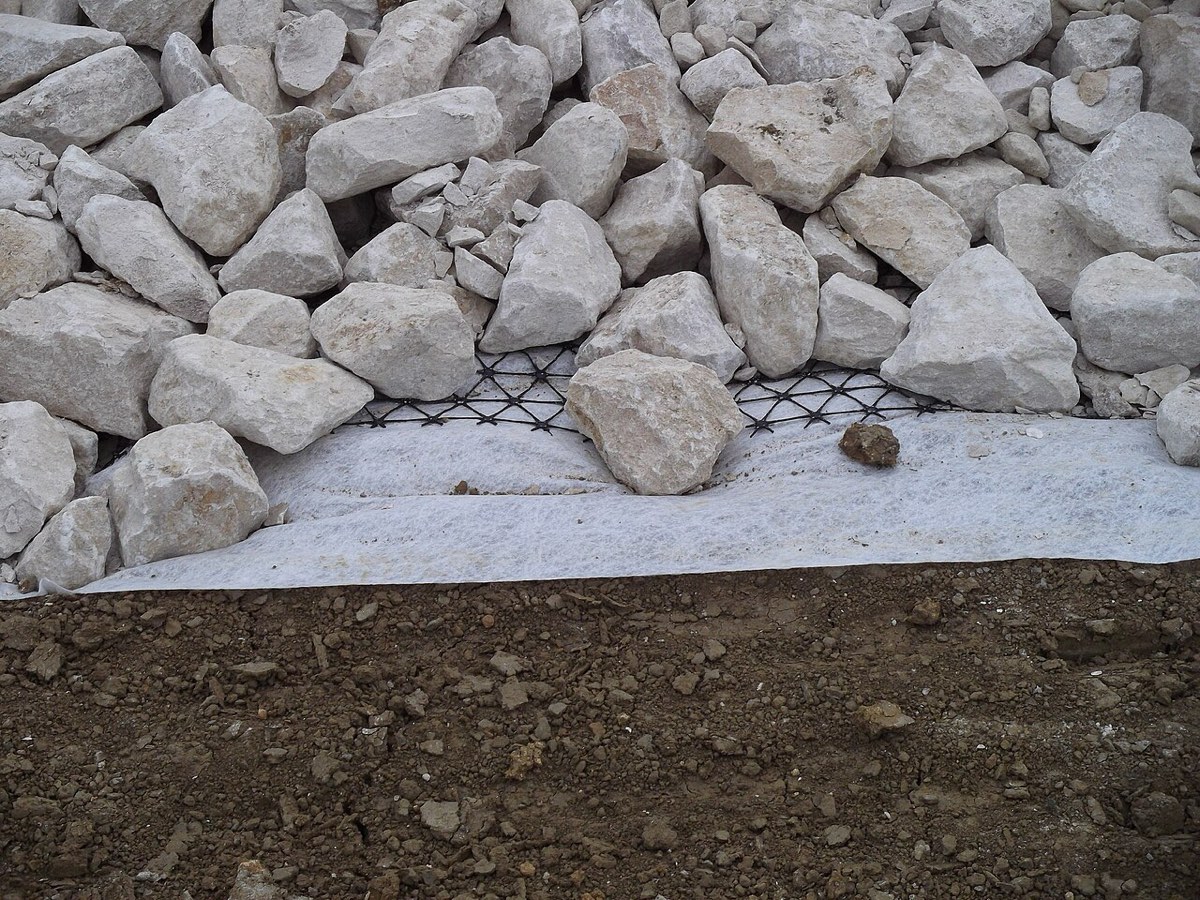
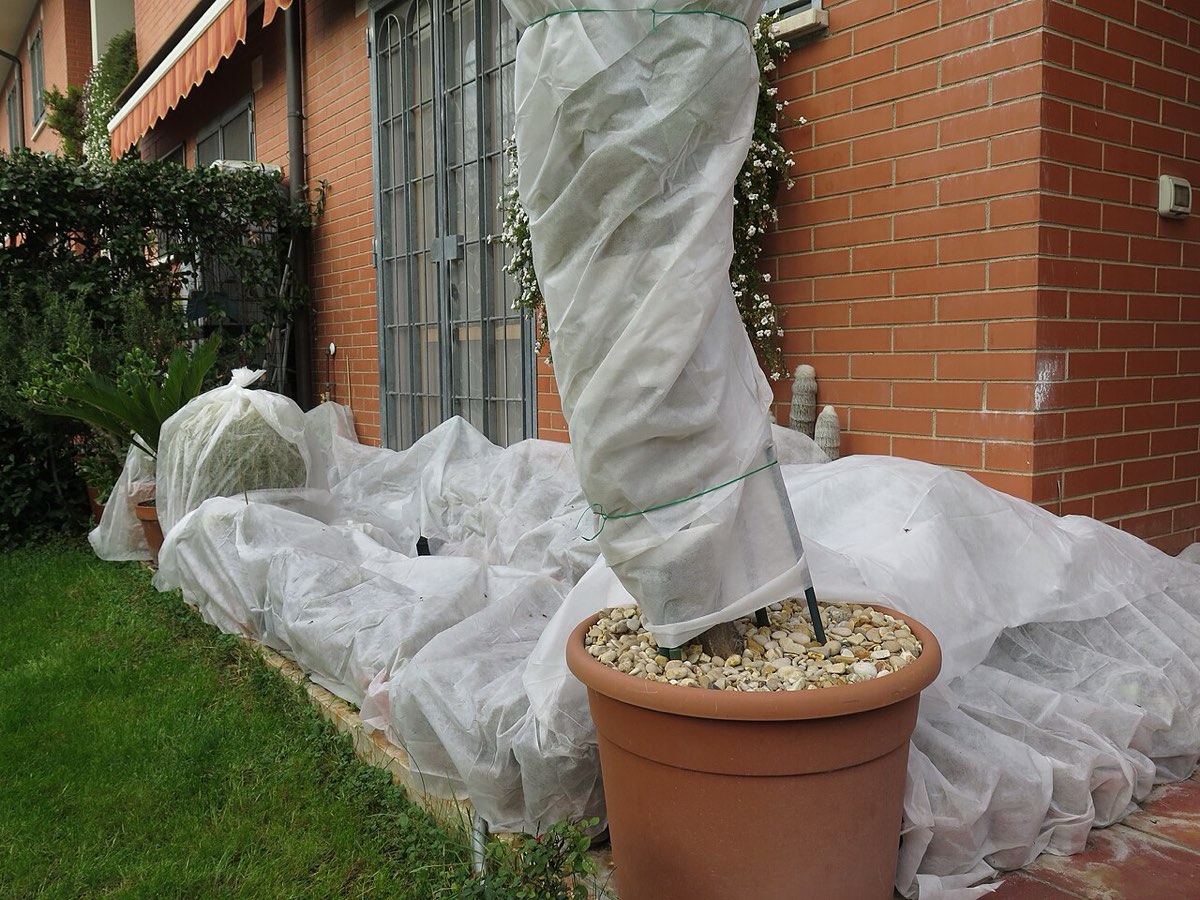
Durable products, on the other hand, are expected to perform for years. Geotextiles separate and stabilise soil layers in roads and embankments, roofing underlays protect buildings, and acoustic and thermal felts reduce noise and weight in vehicles. Agricultural fleece protects crops from frost while still letting light and water through. In these markets buyers focus on long-term properties such as tensile strength, puncture resistance, UV stability and permeability.
Policy now shapes product design as much as technology does. In the European Union, the Single-Use Plastics Directive requires wet wipes that contain plastic to carry a marking that informs consumers about it, which has accelerated work on cellulose-based and biodegradable alternatives. Producers also face growing questions about recycled content, microfibre release and end-of-life options for both hygiene and durable products. Industry associations such as EDANA in Europe and INDA in North America publish harmonised test methods and organise major trade fairs, where many of these developments are first presented.
To go deeper, browse our technology coverage for production lines and process innovations, the events section for trade fairs and conferences, and the interviews with manufacturers and suppliers who explain their strategies in their own words.
Обзор на русском: где ИИ уже даёт измеримый эффект на линиях нетканых материалов – машинное зрение, предиктивное обслуживание и мягкие датчики.

Graphene is moving from laboratory promise to practical smart textile production, and nonwoven manufacturers are now testing how conductive layers can be integrated witho

Renewable raw materials are becoming more relevant to nonwoven producers, and lignin-based composites are emerging as a practical route for lowering fossil input without

Medical nonwovens are under renewed scrutiny as healthcare buyers look for barrier fabrics that can scale quickly, convert cleanly and maintain reliable protection in hig

Through the vision of Smart Life 2030', Zorlu Textile sets its target to accomplish 50 percent of its textile turnover from smart textile products by 2025.

Chinese company Jiangsu Yingyang Nonwoven Machinery, established in 1993, is a leading nonwoven equipment manufacturer integrating nonwoven equipment and products with it

With the development of business, Jelly kicked start its pace of internation - alization in the year of 1995 and has established its processing factories or service outlet

Fast-moving coverage of launches, investments, supply shifts and commercial moves shaping nonwoven and technical textile markets.
Open category
Research, smart materials, sustainability experiments and next-generation concepts moving from lab to production reality.
Open category
Machinery, converting lines, process engineering and performance upgrades for industrial nonwoven production.
Open category
Trade fairs, symposiums, conference coverage and event-led insight from the global technical textile calendar.
Open category
Executive perspectives, supplier interviews and first-person commentary from decision-makers across the sector.
Open category
Deeper explainers, application reviews and practical context around materials, processes and market direction 99exch.
Open category
Petsa Tekstil has become the first integrated facility in Turkey that produces both recycles, and pet film and leakproof containers.

With the advancements of textile technology and synthetic fibers, smart textiles now covers the fields of nanotechnology, material science, design and textile e

Oerlikons business unit Nonwoven will cooperate with the Chinese machine and plant manufacturer Shaoyang Textile Machinery for nonwoven solutions in the hygiene

In the Oerlikon Manmade Fibers Segment, sustainability stands as a fundamental principle in all dealings with customers and its own employees. With the Oerlikon

Over 500 key stakeholders gather for premier nonwoven personal care products and hygiene conference.

In response to market demands, Andritz has yet again raised the bar for turnkey and customized solutions for drylaid, spunjet, thermobonding, and wetlaid, as we
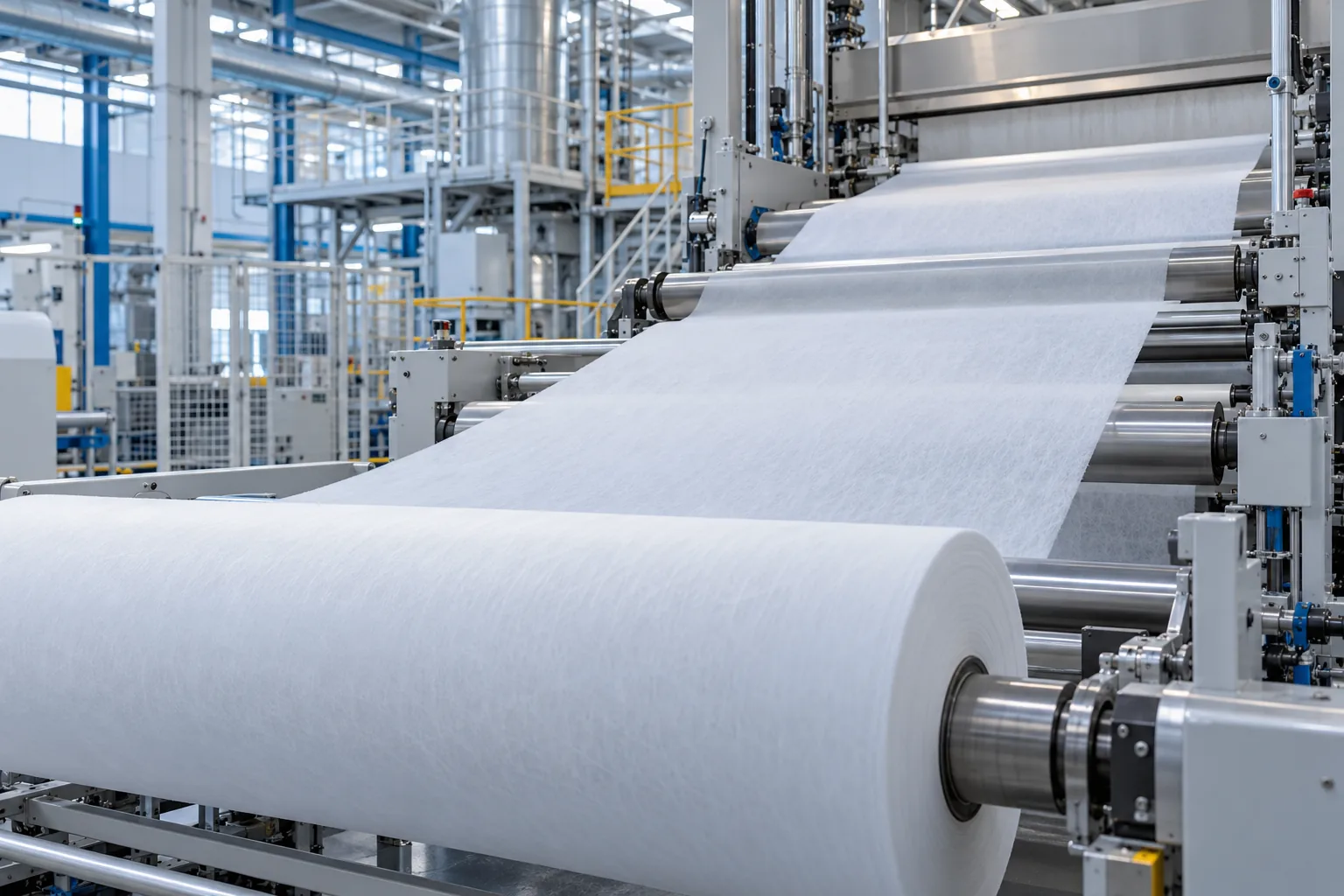
Nonwoven materials are engineered sheets made by bringing fibers together and bonding them without weaving or knitting yarns into a conventional fabric. That distinction opens a wide range of structures: a web can be light or dense, soft or rigid, absorbent or water resistant, and designed for one use or a longer service life. For manufacturers, the value lies in matching the web structure and finishing route to a specific job. For buyers, it means comparing performance in the application rather than judging a material by appearance alone.
Every production decision starts with the intended function. Polypropylene and polyester are widely used where strength, dimensional stability, or efficient conversion matters; viscose, cotton, and other cellulosic fibers can contribute softness and absorbency. Recycled or bio-based inputs may support a different material strategy, but they still need to meet requirements for consistency, cleanliness, and processing. Fiber length, fineness, blend ratio, and surface treatment affect how the web forms and behaves after bonding.
Airlaid and carded processes arrange fibers in different ways, while spunbond and meltblown routes form webs directly from polymer. Hydroentanglement uses fine water jets to bind fibers, and thermal or chemical bonding can add strength or stability. Each route has trade-offs in line speed, energy, material choice, and attainable properties. A useful introduction to production choices can be found in our technology coverage, including reporting on high-speed converting lines.
Product design works backward from the conditions a material will face. A medical barrier may need tested resistance to fluids and reliable seams; a wipe needs a balance of strength, softness, absorbency, and dispersibility; filtration media must retain particles while maintaining airflow. In automotive interiors, acoustic, thermal, and weight targets can matter at once. Protective clothing and industrial covers have their own combinations of abrasion resistance, drape, breathability, and durability. These needs are not interchangeable, which is why a single generic claim rarely describes a material well.
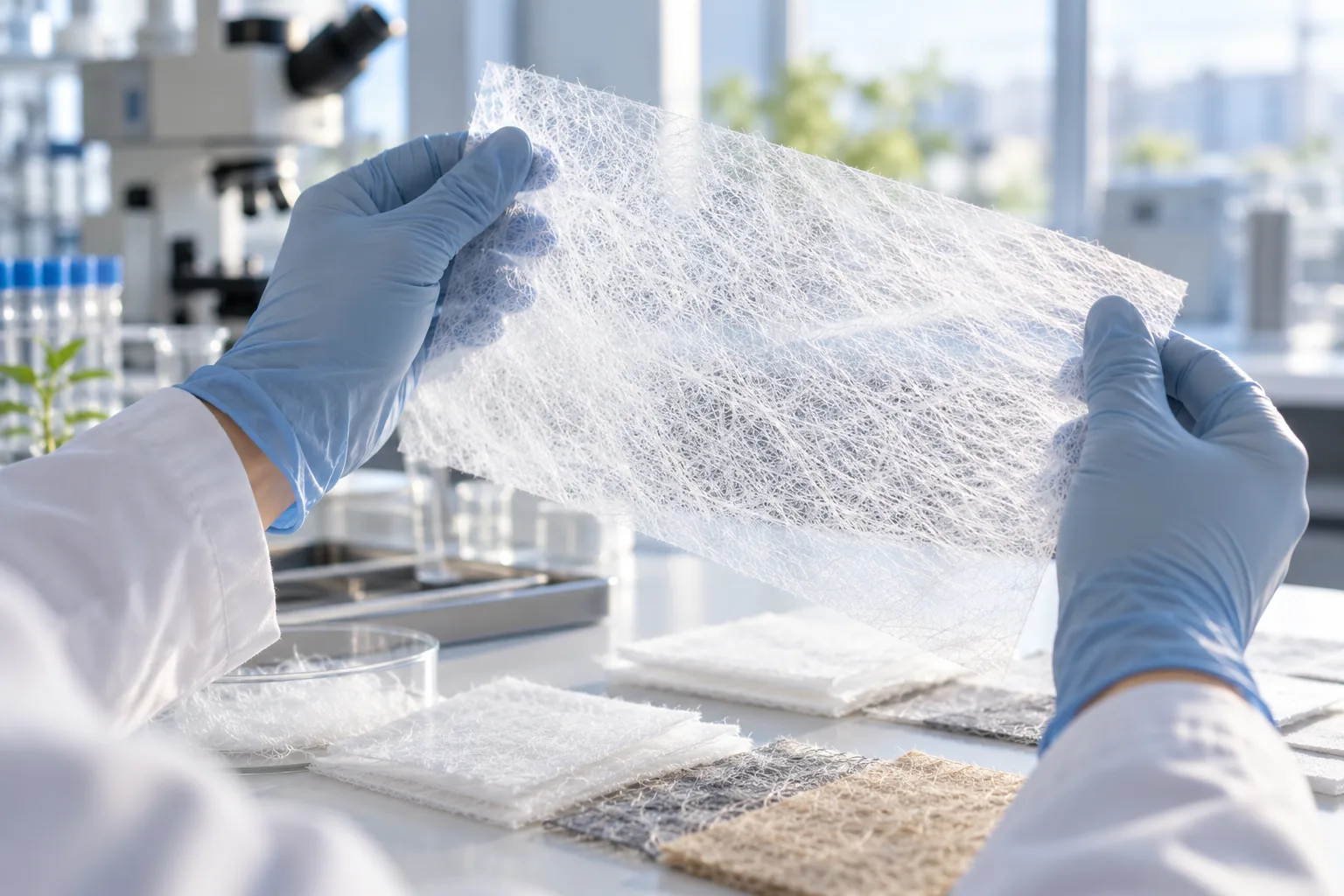
Testing should mirror real use. Teams can measure basis weight, tensile strength, elongation, thickness, air permeability, absorbency, hydrostatic resistance, or filtration efficiency as relevant to the product. They should also record conditioning, sample direction, and test method so results from different suppliers can be compared fairly. Our analysis articles and market reporting follow how these requirements influence product launches and investment decisions.
Technical textiles increasingly combine a supporting substrate with a coating, conductive layer, sensor, or active finish. In a nonwoven, that integration has to respect the web’s porosity, flexibility, and converting needs. A conductive path may be useful for sensing or heating, but its resistance to bending, washing, and joining still matters. Coatings can add barrier or surface properties, yet may alter breathability or recycling options. The most promising concepts connect material science with manufacturing methods that can be controlled at commercial scale.
Research teams are exploring graphene, bio-based polymers, responsive finishes, and lightweight structures for uses ranging from health monitoring to filtration. These projects need more than a striking prototype: repeatability, supply availability, safety, and total cost determine whether they can progress into regular production. Follow our innovation coverage for developments in smart materials, including work on graphene sensors in nonwovens.
Sustainability decisions are strongest when they consider the whole product system. Renewable or recycled feedstock can reduce reliance on virgin fossil resources, but sourcing, processing energy, transport, product lifetime, and end-of-life routes all affect the result. A lighter product may use less material, while a durable product may last longer; either benefit depends on how the item is used and disposed of. Claims should be specific about the material, boundary, and method behind them, and certifications should be checked against their published scope.
Designers can evaluate whether a product can use fewer layers, simpler blends, or feedstocks with a dependable chain of custody. They can also ask converters and recyclers what formats they can handle in practice. Biodegradability is not a universal property in every environment, and a material designed for industrial composting may require controlled conditions. Our reports on biodegradable nonwovens and textile recycling examine these questions in context.
Before approving a new material, procurement and technical teams can define a clear specification, request representative samples, and agree on test methods and tolerances. A pilot run helps reveal issues that a laboratory coupon cannot show, such as web handling, edge stability, dusting, winding, or compatibility with adhesives and printing. Supplier reviews should cover change control, traceability, capacity, quality systems, and communication during a disruption. These steps help avoid late redesigns and make scale-up more predictable.
Good qualification also leaves room for improvement. Teams can share process data, compare production waste, and identify where a small change in fiber blend, bonding, or finishing could improve yield without compromising product performance. For a broader view of market shifts and manufacturing investments, browse the latest nonwoven industry news or explore interviews with the people developing and producing these materials.
Nonwovens sit at the intersection of materials, machinery, converting, regulation, and end-user demand. Advances in fiber chemistry may create new options, but production equipment determines whether those options can be made consistently. Buyers influence the market through specifications and sourcing expectations; converters translate those requirements into usable products. Trade events and technical conferences remain useful places to compare approaches, see equipment, and discuss standards with suppliers. Our events coverage follows those conversations alongside launches, research, and company announcements.
For readers assessing a new material or process, a practical checklist is straightforward: identify the use conditions, define measurable performance, compare production routes, validate the supplier at pilot scale, and substantiate environmental claims with evidence. This keeps attention on the product’s actual job and makes trade-offs visible early. The articles and category pages across this journal provide a starting point for following developments across hygiene, healthcare, mobility, filtration, construction, and other technical textile markets.
Use category navigation, related stories and the HTML sitemap to move through the live editorial core without losing chronology or context.
Open HTML sitemap